( )に何を入れますか。最もよいものを一つ選びなさい。
弟の部屋はいつも本やおもちゃで__だ。
Answer
めちゃくちゃmessy; in a mess
Books and toys are scattered around the room, so めちゃくちゃ fits to describe a messy, chaotic state.
My younger brother's room is always a mess with books and toys.

めちゃくちゃmessy; in a mess
Books and toys are scattered around the room, so めちゃくちゃ fits to describe a messy, chaotic state.
My younger brother's room is always a mess with books and toys.
都会とかいcity
都 is と, as in 首都 (しゅと, capital city). 都 means city and 会 suggests gathering: think of a city as a place where people gather.
It seems my younger brother has completely gotten used to living in the city.
ホームrailway platform
ホーム is the train station platform where passengers wait for a train.
I wait for the train on the station platform.
さえeven; not even
Add さえ with a negative ending to mean not even: 時間さえなかった means there was not even time.
I was so busy today that I did not even have time to eat lunch.
前後ぜんごfront and behind
前 is ぜん as in 午前 (ごぜん, morning), and 後 is ご as in 午後 (ごご, afternoon). Together, in front and behind give "front and back".
Before moving the car, check for safety in front and behind.
けちstingy
お金を使う describes spending money, and けち expresses reluctance to part with it, meaning stingy or tightfisted.
My older brother is stingy when it comes to spending his own money.
決まりきまりrule
決める (きめる, decide) → 決まり: something decided as a rule. The rule is what everyone is expected to follow.
Please follow the school rules carefully.
おしゃべりchatting
おしゃべりをする means to chat; it can suggest talking too much when quiet is expected.
Even though class was in progress, I kept chatting with the friend in front of me instead of being quiet, and the teacher told me off.
たっぷりplenty; amply
時間 (じかん, time) + をたっぷり使う means spending plenty of time on something with room to spare.
On my days off, I take plenty of time to cook.
ごとにevery
ごとに means each or every: the curtains change with each season.
I change this room's curtains every season.
保険ほけんinsurance
険 is けん, as in 危険 (きけん, danger). Pair 保 (protect, guarantee) with 険 (danger) to remember insurance.
I plan to enroll in a new insurance policy starting next month.
本人ほんにんthe person concerned
本人 means the actual person involved, rather than someone speaking about them.
Please ask the person concerned for the details.
書留かきとめregistered mail
かきとめでおくる means “send by registered mail”. The postal service records acceptance and delivery, so important documents can be traced.
I sent the important contract by registered mail.
外科げかsurgery department
けが refers to an injury and 診てもらった means receiving a medical examination, so 外科 (surgery department) is the medical department needed.
Because I got injured, I was examined at a nearby surgery department.
制作せいさくproduction (of artistic works)
制作 specifically refers to creating creative or artistic works like anime, films, and artwork.
I create animated videos as a hobby.
国語こくごJapanese language (school subject)
国 is こく, as in 外国 (がいこく, foreign country), and 語 is ご, as in 英語 (えいご, English). Together, 国 (country) + 語 (language) refers to national language.
My younger brother is doing his Japanese homework.
たびにevery time; whenever
Add たびに to a dictionary-form verb like 聞く to express that whenever you listen to the song, the same memory comes back.
Every time I hear this song, I remember my parents' home.
いたずらmischief
いたずら can mean a prank or mischievous behavior, especially by a child.
My younger brother drew on the wall with a pen as a prank, and our mother scolded him severely.
交流こうりゅうinteraction, exchange
交 is こう, as in 交差点 (こうさてん, intersection), and 流 is りゅう, as in 流行 (りゅうこう, trend): mingling and flowing together create social interaction.
Deepen interaction with the neighbors.
母親ははおやmother
Mother’s Day gives the reason for choosing mother as the recipient of the flowers.
I gave my mother flowers on Mother’s Day.
正社員せいしゃいんregular employee
社 means company and 員 means member: an employee. 正社員 is a regular employee, rather than someone hired only for a limited period.
I will start working as a regular employee next month.
サンプルsample
Shops hand out a サンプル (sample) of cosmetics so customers can try a small amount before buying.
I received a cosmetics sample at the shop.
せいでbecause of; due to (negative outcome)
Use せいで when a cause leads to a negative or unwanted outcome like not being able to wake up.
Because I stayed up late at night, I couldn't wake up in the morning.
父親ちちおやfather
私の (my) needs a person noun to serve as the subject who goes for a walk, making 父親 (father) the natural fit.
My father goes for a walk early every morning.
読書どくしょreading books
書 is read しょ, as in 辞書 (じしょ, dictionary). 読 (read) + 書 (book): reading books.
I read a little before going to sleep.
協力きょうりょくcooperation
協力する means working together toward the same task or goal.
The family worked together to do a thorough cleaning.
生意気なまいきcheeky
生意気 describes speaking or behaving too boldly for your position, often toward someone older.
My younger brother got scolded for saying something cheeky.
後悔こうかいregret
後悔 is regret about something already done or a choice already made.
I regretted buying expensive clothes.
ということだit is reported that…
ニュースによると names the source; ということだ reports information from that source. Together they mean “according to the news, …”.
According to the news, electricity rates will rise starting next month.
署名しょめいsignature; signing
署 means sign and 名 means name: writing your name as your signature. It is more than simply telling someone your name.
Please sign here after reading the contract.
魅力みりょくcharm; appeal
Having a spacious garden is an appealing feature of the house, so 魅力 fits best to describe its charm or attraction.
The charm of this old house is that it has a spacious garden.
おんぶpiggyback ride
おんぶ means carrying someone on your back, often a child.
The child said they were too tired to walk, so I carried them home on my back.
製品せいひんmanufactured product
品 is ひん, as in 食料品 (しょくりょうひん, groceries). 製 (manufacture) + 品 (goods): manufactured goods.
This product is easy to use and popular.
大会たいかいtournament
You practice for a sports tournament or meet, so 大会 fits naturally with テニス and 練習.
I am practicing every day for next week's tennis tournament.
がちtends to (unwanted habit)
不足し + がち means tending not to get enough vegetables, describing an unwanted negative tendency.
When living alone, you tend to run short of vegetables without realizing it.
広告こうこくadvertisement
告 is こく, as in 報告 (ほうこく, report). 広 (wide) + 告 (inform): informing widely through an advertisement.
I learned about the new shop by seeing a newspaper advertisement.
学期がっきschool term, semester
With 始まります (starts), you need a time period like 学期 (school term), not school expenses or university departments.
A new school term starts next week.
さっぱりfeeling refreshed
After taking a bath, さっぱり expresses feeling clean, refreshed, and renewed.
I took a bath and felt refreshed.
好みこのみtaste; preference
好 is read す in 好き (すき, liked), but この in 好み for someone's taste or preference.
I adjust the seasoning to my family's tastes.
ぼんやりidly, vacantly
ぼんやり過ごす describes passing time idly or daydreaming with an unfocused mind.
On my days off, I often spend my time idly in my room.
短所たんしょweak point
所 is read しょ as in 住所 (じゅうしょ, address); here 短 (fault) and 所 (point) combine to mean a weak point.
It is difficult to fix one's own shortcomings.
っぽい-ish, -like, watery
Add っぽい directly to 水 to form 水っぽい, meaning watery or having too much water.
This soup is a little watery, isn't it?
努力どりょくeffort
実を結ぶ means to bear fruit or pay off. 努力 fits because daily effort leads to passing an exam.
Daily effort bore fruit, and I passed the exam.
今後こんごfrom now on
今 is こん as in 今月 (こんげつ, this month), and 後 is ご as in 午後 (ごご, afternoon): now + after refers to from now on.
I talked with my family about our life from now on.
長男ちょうなんeldest son
The first child is a boy, making him the eldest son. 次男 would be a second son.
Our first child was a boy, so I told my father about the birth of our eldest son.
きっかけtrigger; initial motivation
きっかけ means the trigger or initial motivation that prompted an action like taking up cooking.
What prompted me to start cooking was my mother's illness.
生物せいぶつliving thing, creature
生 is せい as in 学生 (がくせい, student), and 物 is ぶつ as in 動物 (どうぶつ, animal): a living thing.
I found a small creature in the river.
にしたがってas / in proportion as
Add にしたがって after 夕方になる to express that as evening approaches, the wind steadily strengthens alongside that change.
As evening approached, the wind grew stronger.
少しもすこしもnot at all (with negative)
With the negative verb 下がらなかった, 少しも means "not even a bit" or "not at all".
I took medicine, but my fever didn't go down at all.
地域ちいきarea, region
地 is ち, as in 地下鉄 (ちかてつ, subway). Combined with 域 (region), it forms an area or district.
In the area where I live, garbage sorting is very detailed.
回復かいふくrecovery, restoration
After sleeping enough, your physical strength (体力) returns to normal. 回復 means recovery or restoration of health and stamina.
Because I slept enough, my physical strength recovered.
どうせanyway; in any case
どうせ〜なら means "if ... anyway". It expresses that if being late is going to happen anyway, you should at least call beforehand.
If you are going to be late anyway, I want you to let me know in advance.
住まいすまいdwelling; residence
住 is read す, as in 住む (すむ, to live): a place to live is a dwelling.
I will look for a residence near the station.
てはじめてonly after
てはじめて marks the experience that first made a realization possible.
Only after living on my own did I understand how hard my parents had it.
役割やくわりrole, duty
役割 refers to someone's role or assigned duty, making 家事の役割 the natural phrase for dividing household chores.
Our family decided on everyone's share of the household chores.
失業しつぎょうlosing one's job
業 is read ぎょう, as in 営業 (えいぎょう, business). Combining 失 (lose) with 業 (vocation) literally describes losing one's work.
My older brother lost his job and is looking for work.
円えんyen
小遣い refers to pocket money, so use 円 to state the amount in Japanese yen.
This month's allowance is 5,000 yen.
唯一ゆいいつonly, sole
一 is いつ, as in 同一 (どういつ, identical). Combining 唯 (only) with 一 (one) means only or sole.
Listening to music is my only pleasure.
停電ていでんpower outage
台風 (typhoon) causes a loss of electricity, making 停電 (blackout) the natural fit with になった.
There was a blackout last night because of the typhoon.
学歴がくれきeducational background
歴 is れき, as in 歴史 (れきし, history). 学歴 is your education history: the schools and qualifications in your background.
This company hires capable people regardless of their educational background, such as whether they graduated from university.

One free lesson a day.
The questions above are a random sample. PocketMoji turns them into a full N3 course.
One free lesson a day.
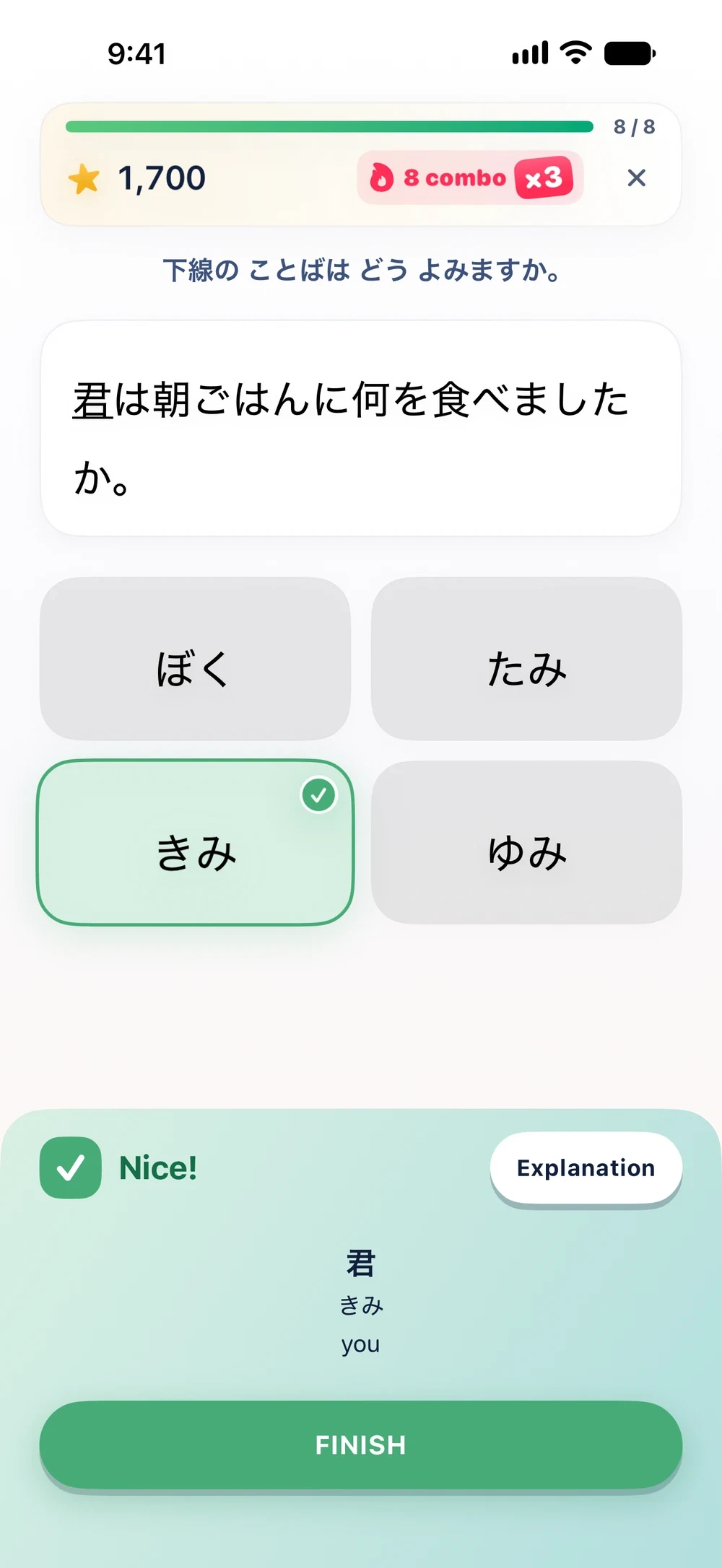
450+ N3 vocabulary, kanji and grammar questions, with the same scores and combos.
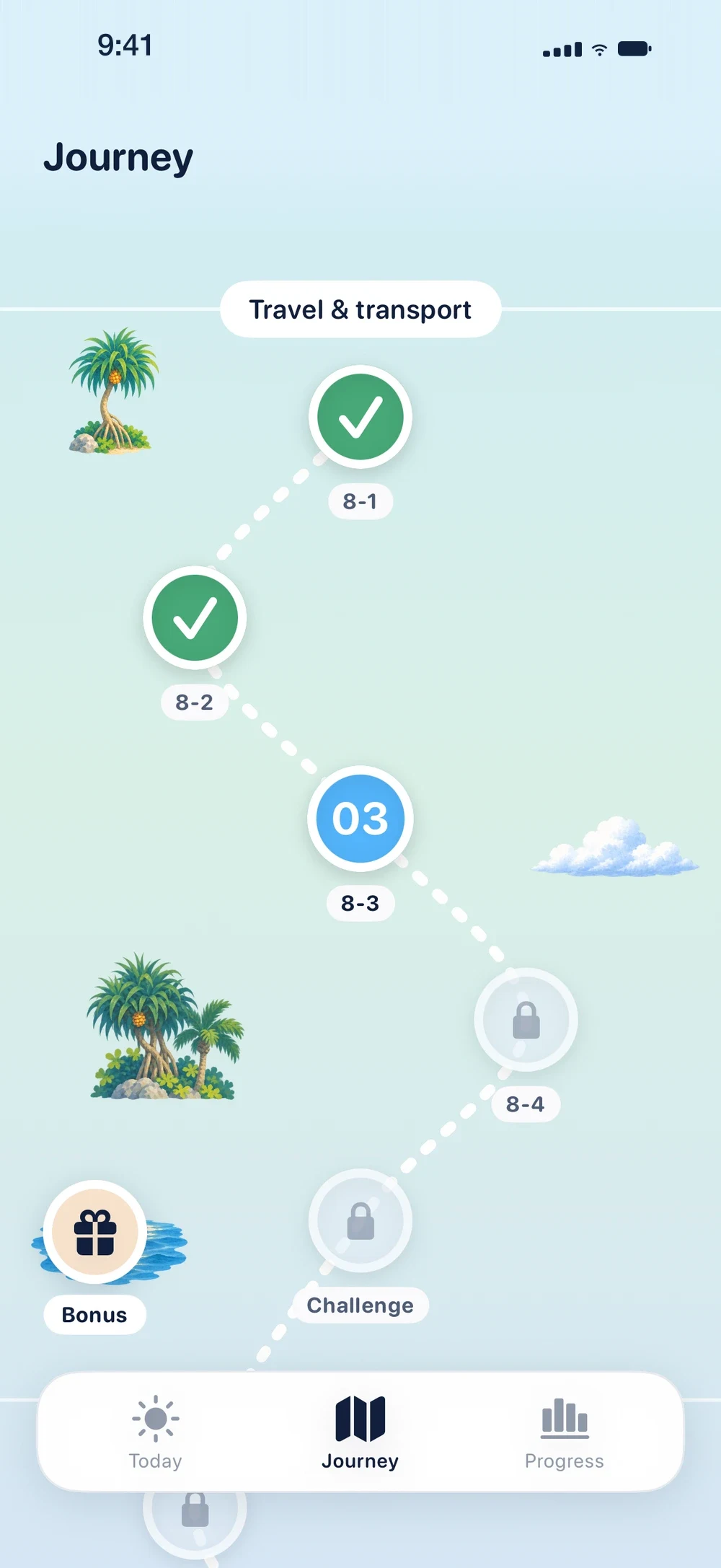
Learn in order, one topic at a time, instead of a random mix.
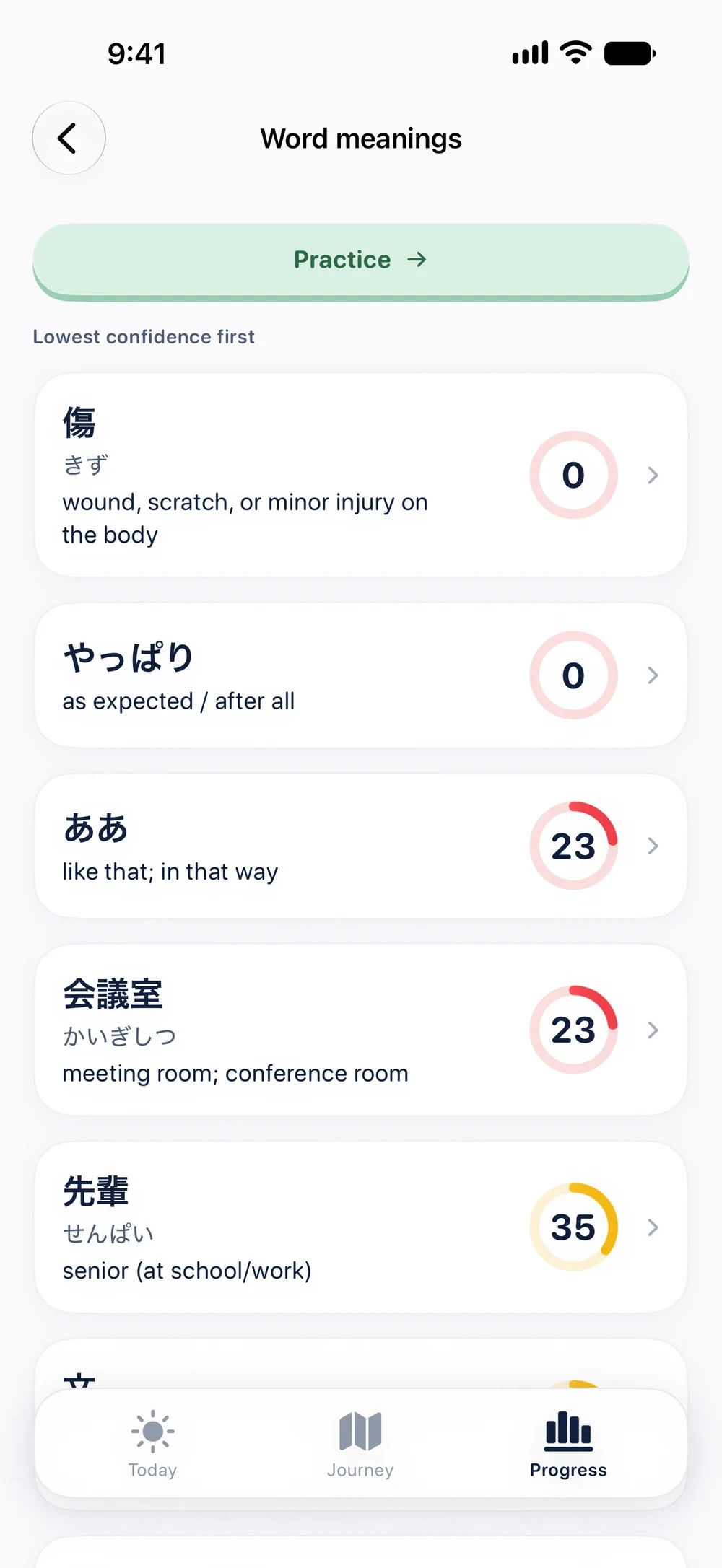
Find out which skills need work, and go back to what you missed.
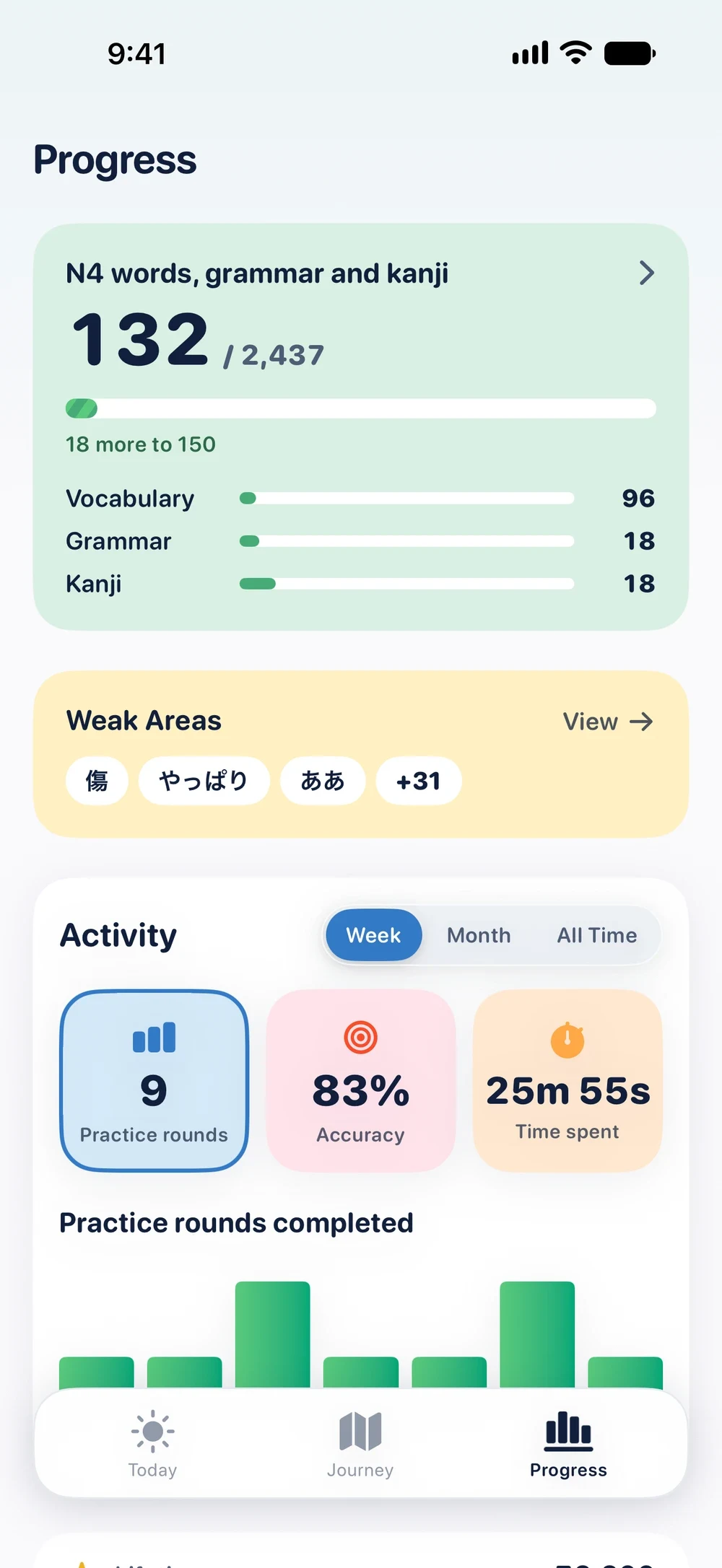
Your sessions, accuracy and study time, saved in one place.
More free N3 practice: printable PDF with answers · study plan calculator
Each round picks 10 of 60 free vocabulary, kanji and grammar questions at random. Read the explanation when you miss one, then play another round to beat your score. No account is needed.
Read beyond the blank. Ask what relationship the sentence expresses: a reason, a contrast, a condition, or a sequence. Check that your chosen answer fits the complete meaning.
When two choices seem plausible, explain what each would mean in this exact sentence. Add reading and listening tasks so you can recognize the same patterns outside a quiz.
Use the free JLPT study-plan calculator to divide your available time between vocabulary, grammar, reading, and listening. These short sets are practice exercises, not a complete mock exam or a pass prediction.
For exam-format practice, consult the official JLPT practice workbooks. PocketMoji is an independent study app and is not affiliated with the JLPT organizers.