下線の言葉の読み方を一つ選びなさい。
祖母は趣味で伝統的な工芸の教室に通っています。
Answer
工芸こうげいcrafts
工 is こう as in 工場 (こうじょう, factory). 工 (craft) + 芸 (art): handcrafted artistic goods.
As a hobby, my grandmother attends a class in traditional crafts.

工芸こうげいcrafts
工 is こう as in 工場 (こうじょう, factory). 工 (craft) + 芸 (art): handcrafted artistic goods.
As a hobby, my grandmother attends a class in traditional crafts.
エチケットetiquette
エチケット is considerate social behavior, such as covering your mouth when you sneeze.
It's good etiquette to cover your mouth when sneezing.
ざるを得ないざるをえないhave no choice but to
帰ら is 帰らない without ない. Attach ざるを得ない to express having no choice but to do something due to circumstances.
Since the car broke down, I have no choice but to walk home.
修了しゅうりょうcompletion of a course
修 means study and 了 means finish: completing a course or program. It does not simply mean the day’s class has ended.
I completed a graduate program and took a research job.
国籍こくせきnationality; citizenship
A country issues its ordinary passports to its citizens. Residence status or birthplace alone does not establish citizenship.
To obtain a passport, you need citizenship of that country.
ことにto my (delight, surprise)
Add ことに after an emotion word like うれしい to express your personal reaction: “to my delight”.
To my delight, a photo of a cute baby arrived from my older sister.
容器ようきcontainer
容 (よう, contain) + 器 (き, vessel): something that holds food, liquid, or other contents, such as a tub or bottle.
I moved the leftover soup into another container and put it in the refrigerator.
紅葉こうようleaves turning red in autumn
秋になると introduces autumn, when garden trees change color. 紅葉する specifically describes autumn foliage turning red or yellow.
When autumn arrives, the garden trees turn beautifully vibrant colors.
はともかくleaving aside
はともかく leaves one aspect aside while judging another: taste matters more than appearance.
Whatever it looks like, this food tastes really good.
国立こくりつnational
国 is こく, as in 国際 (こくさい, international). 国 (country) + 立 (set up): established by the nation.
My younger brother plans to attend a national university starting next spring.
余計よけいunnecessary or uncalled-for
余計な口出し means meddling or making uncalled-for remarks, which explains why the speaker got scolded.
I made an uncalled-for remark to my younger brother and he got angry at me.
を問わずをとわずregardless of
Add を問わず after variables like 年齢や性別 to mean regardless of them, meaning anyone can participate.
Anyone can participate in this cooking class regardless of age or gender.
友好ゆうこうfriendship
友 is ゆう, as in 親友 (しんゆう, close friend). Combining 友 (friend) and 好 (fond) gives friendship or friendly relations.
We held an exchange event with international students to deepen friendship between our countries.
外れるはずれるto come off
Use 外れる for parts coming off or detaching, such as a button coming off clothing.
It would be troublesome if a jacket button came off, so I sewed it back on firmly.
あげくin the end, after all that
悩んだ + あげく expresses that after a long period of worrying, things ended in an undesirable or disappointing result.
After worrying over this and that, in the end I left the store without buying anything.
受話器じゅわきtelephone receiver
話 is read わ, as in 電話 (でんわ, telephone): together, receiving (受) talk (話) on a device (器) forms telephone receiver.
The bell rang, so I quickly picked up the receiver.
ぶつかるto bump into
Walking in a dark hallway and having your shoulder strike the corner of a wall describes bumping into something, which is expressed by ぶつかる.
While walking down a dark hallway, my shoulder bumped into the corner of the wall.
就業しゅうぎょうworking; employment
就 (しゅう, take up) + 業 (ぎょう, work): doing or starting work. The notice gives the hours when employees work.
Working hours at this company start at nine in the morning.
に応じてにおうじてdepending on, in response to
変化 + に応じて means adjusting in response to changes, matching your clothes to shifts in temperature.
I adjust the clothes I wear in response to changes in temperature.
たちまちin an instant, right away
たちまち means that a change takes place in an instant, describing how the freshly baked bread was gone right away.
As soon as I put the freshly baked bread on the table, it was gone in an instant.
並木なみきrow of trees
木 keeps its familiar reading き, as in 木 (き, tree). 並 (line up) + 木 (tree): trees standing in a row.
Every morning on my way to the station, I walk while looking at the pretty row of trees.
ものかas if; no way; I'll never
Add ものか after a dictionary-form verb like 行く to express strong refusal or emphatic determination, meaning "I will never" or "no way".
There is no way I will ever go to such a terrible restaurant again.
敬いうやまいrespect
Greeting a senior politely expresses respect. 敬う means to treat someone with respect.
It is important to respect senior colleagues and greet them politely.
純粋じゅんすいinnocent
純粋 can describe innocence or being free from ulterior motives.
I wasn't sure how to answer the child's innocent question.
ものだexpressing a general truth or deep feeling
Add ものだ after 早い to express a deeply felt general truth or exclamation about how fast children grow.
Children really grow up fast.
巻くまくto wrap or wind around
Use 巻く for winding or wrapping items around the body, such as wrapping a scarf around your neck.
It was getting colder, so I decided to wrap a scarf around my neck.
勤め先つとめさきplace of employment
勤める (つとめる, work for) + 先 (place): the company or workplace where you are employed.
Since moving, I have been looking for a new place to work.
ミシンsewing machine
ミシンの使い方 means how to use a sewing machine. A ミシン stitches fabric.
My mother taught me how to use a sewing machine.
だけにprecisely because
だけに connects a reason with a result that feels especially strong because of it.
Because I'd practiced every day, losing the match was especially frustrating.
執筆しっぴつwriting; authoring
執 (しっ, grasp) + 筆 (ぴつ, writing brush): taking up a brush to write. 筆 keeps ぴつ from 鉛筆 (えんぴつ, pencil).
A famous author wrote an article for a new magazine.
しびれるto go numb
When sitting kneeling on the floor for a long time, legs go numb or fall asleep, which is しびれる.
My legs went numb because I had been sitting formally on the floor for a long time.
を込めてをこめてfilled with; with (feelings)
Add を込めて after a feeling such as 感謝の気持ち to express doing an action full of that emotion.
For my mother's birthday, I knitted a scarf filled with feelings of gratitude.
売買ばいばいbuying and selling
売 is ばい in 販売 (はんばい, selling) and 買 is ばい in 購買 (こうばい, buying): together, selling and buying mean trade.
These days, you can easily buy and sell secondhand goods using apps.
包帯ほうたいbandage
After putting medicine on an arm wound (腕の傷), you wrap (巻いた) a bandage.
After applying medicine to the wound on my arm, I wrapped a bandage around it.
出入口でいりぐちentrance and exit
出 takes で as in 出る (でる, to exit), combined with 入口 (いりぐち, entrance) to mean an entrance and exit.
Please do not put trash in front of the apartment's entrance and exit.
とかI hear that; apparently
Add とか at the end of a sentence to report secondhand news or hearsay you heard, meaning "I hear that...".
I hear that the son next door is going to study abroad starting next month.
そそっかしいcareless, scatterbrained
そそっかしい describes someone careless or scatterbrained who acts hastily, fitting someone who frequently forgets their wallet at home.
My older brother is careless, so he often forgets his wallet at home.
加速かそくacceleration; speeding up
加 is か in 増加 (ぞうか, increase). Adding 加 (add) to 速 (speed) describes speeding up.
When going down the slope, the bicycle suddenly accelerated and it was a bit scary.
ことだshould
ことだ after a dictionary-form verb gives advice about what someone should do.
If you want to recover from your cold quickly, keep warm and get some sleep.
説得せっとくpersuasion
説 (せっ, explanation) + 得 (とく, gain): gaining someone’s agreement through explanation. 説 has the same meaning in 説明 (せつめい, explanation).
I took time to persuade my parents, who were opposed.
昼寝ひるねnap
少し〜をする fits taking a short daytime rest. 昼寝 forms the natural phrase 昼寝をする for taking a nap.
Taking a short nap on days off has become a habit of mine.
といったsuch as; like
掃除や洗濯 introduces examples, and といった connects them to the general category 家事 to mean "chores such as cleaning and laundry."
On my days off, I am busy with household chores such as cleaning and laundry.
悔やむくやむregret
悔やむ means regretting something, usually a past action or missed opportunity.
Rather than regretting the past, let's think about our plans from now on.
変動へんどうfluctuation
Use 変動 for shifting numbers like prices or temperatures. 価格の変動 means price fluctuations.
Lately, fluctuations in vegetable prices have been extreme.
てはいられないcannot afford to keep doing
With the exam approaching, you cannot afford to stay relaxed. After のんびりして, add はいられない to express that you cannot keep doing something.
The exam is coming up, so I can't afford to take it easy anymore.
体積たいせきvolume, cubic capacity
体 is たい, as in 団体 (だんたい, group). Together, 体 (object) + 積 (volume) refers to three-dimensional capacity.
I helped with my child's homework by calculating the volume of a box.
コントロールcontrol, regulation
With 量 (amount), コントロールする means to manage or regulate how much food you eat for your health.
For my health, I control the amount of food I eat every day.
夕刊ゆうかんevening edition
夕 is ゆう, as in 夕飯 (ゆうはん, evening meal). 夕 (evening) + 刊 (publish): an evening paper.
When my father returns home from work, he reads the evening newspaper while drinking tea.
ねばならないmust
ねばならない means must. Attach ねば to the verb form before ない: 寝ない becomes 寝ねばならない.
I need to get up early tomorrow, so I must go to bed now.
刺さるささるto pierce or get stuck in
刺さる means to prick or pierce into something, fitting a sharp fish bone getting lodged in the throat.
It hurts when a fish bone gets stuck in your throat.
不規則ふきそくirregular
不 is ふ, as in 不便 (ふべん, inconvenient), added to 規則 (きそく, rule) to describe something lacking regularity.
Work has been busy lately, so my eating habits have become irregular.
にもかかわらずdespite; even though
Add にもかかわらず after 雨が降っている to mean "even though" or "despite", showing an outcome contrary to expectations.
Even though it was raining, my father went out for a walk.
やむをえないunavoidable, cannot be helped
急用 means urgent business arose, so canceling the trip is unavoidable (やむをえない) under the circumstances.
Because urgent business came up, canceling this trip cannot be helped.
学士がくしbachelor’s degree
学 (がく, study) + 士 (し, scholar): a bachelor’s degree. The word can also refer to someone who holds that degree.
I graduated from university and earned a bachelor’s degree.
てこそonly by doing
てこそ marks an action as necessary for the realization that follows: understanding comes through cooking yourself.
Only by cooking for yourself can you understand your parents' hard work.
汚すよごすmake dirty
汚す means to make something dirty. The shirt is what gets dirtied.
If you get mud on a new white shirt, it can be hard to wash out.
学説がくせつacademic theory
学 (がく, study) + 説 (せつ, theory): a theory developed within an academic field, rather than an everyday guess.
The professor explained a new academic theory in detail during class.
気軽きがるat ease
気軽 describes doing something without feeling tense, burdened, or overly hesitant.
Being able to act without holding back or getting nervous is described as being carefree.
につけwhenever; every time
Add につけ after 見る to express that whenever you look at the photos, the memory of your mother naturally comes to mind.
Whenever I look at family photos, I remember my mother back in my hometown.
領収りょうしゅうreceipt of money
収 is しゅう, as in 収入 (しゅうにゅう, income). 領収 is receiving money; 領収書 (りょうしゅうしょ, formal receipt) is the document confirming payment.
After paying the membership fee, I received a receipt at the counter.

One free lesson a day.
The questions above are a random sample. PocketMoji turns them into a full N2 course.
One free lesson a day.
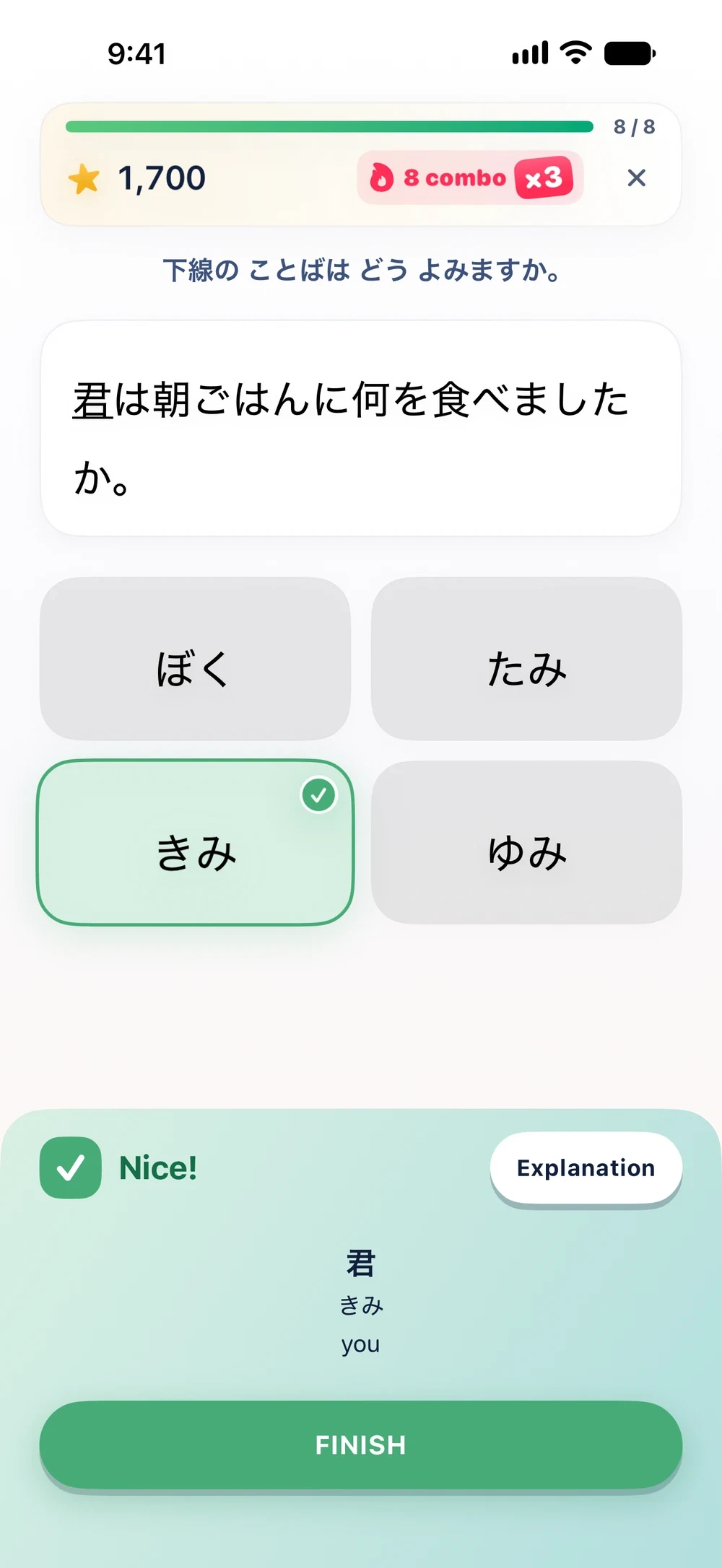
400+ N2 vocabulary, kanji and grammar questions, with the same scores and combos.
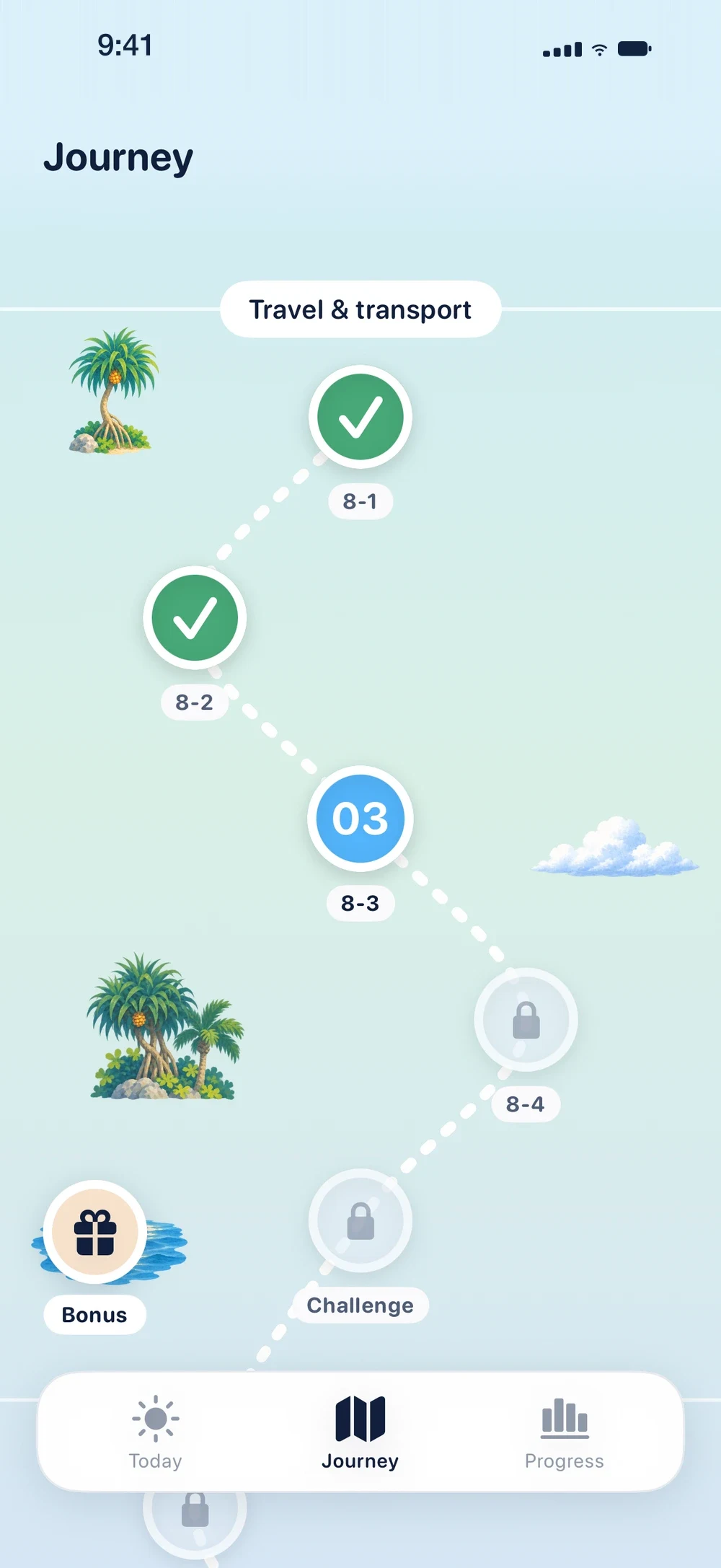
Learn in order, one topic at a time, instead of a random mix.
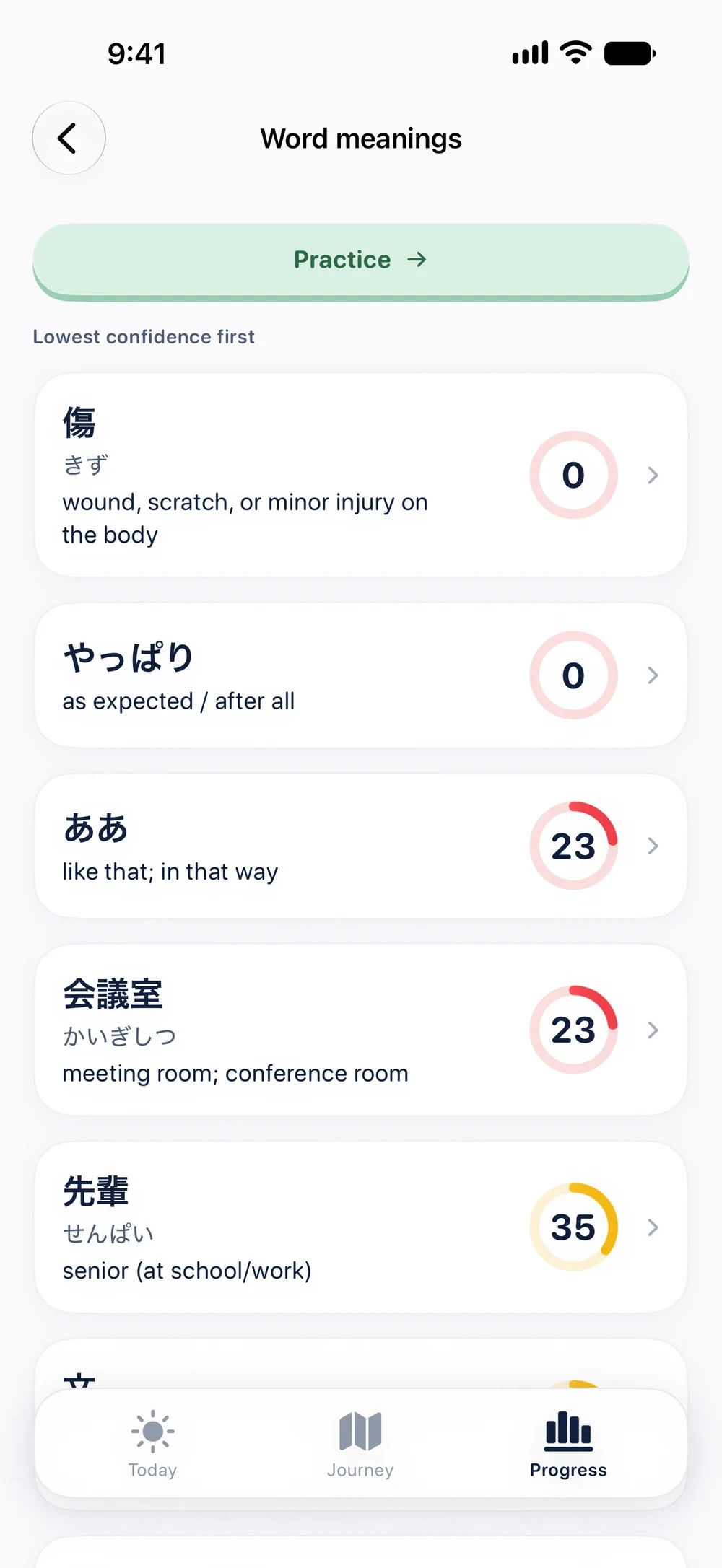
Find out which skills need work, and go back to what you missed.
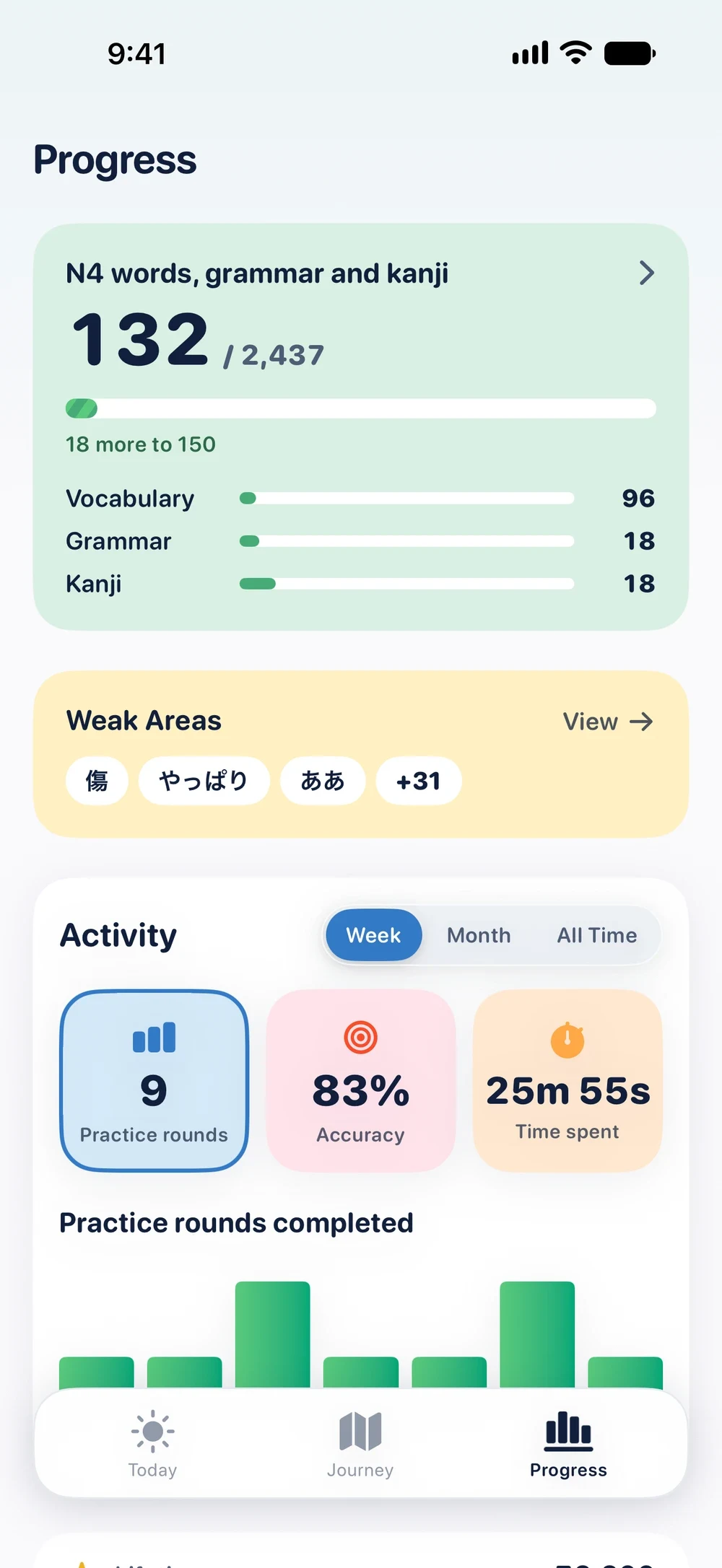
Your sessions, accuracy and study time, saved in one place.
More free N2 practice: printable PDF with answers · study plan calculator
Each round picks 10 of 60 free vocabulary, kanji and grammar questions at random. Read the explanation when you miss one, then play another round to beat your score. No account is needed.
Check both meaning and usage. A familiar grammar pattern can still be wrong for the speaker’s intention or the form of the surrounding sentence.
Keep a short record of the distinction you missed, with the sentence as evidence. Pair grammar practice with longer reading and listening so that context stays part of your preparation.
Use the free JLPT study-plan calculator to divide your available time between vocabulary, grammar, reading, and listening. These short sets are practice exercises, not a complete mock exam or a pass prediction.
For exam-format practice, consult the official JLPT practice workbooks. PocketMoji is an independent study app and is not affiliated with the JLPT organizers.