( )に何を入れますか。最もよいものを一つ選びなさい。
親しい間柄__、礼儀を欠いてはならない。
Answer
といえどもeven though; even if
親しい間柄 + といえども concedes that even between close friends, basic manners must still be kept.
Even among close friends, one must not lack courtesy.

といえどもeven though; even if
親しい間柄 + といえども concedes that even between close friends, basic manners must still be kept.
Even among close friends, one must not lack courtesy.
新築しんちくnewly built
来月完成する means construction will be finished next month. 新築 describes a newly built building.
We're planning to move as a family into a newly built apartment building that will be finished next month.
依然いぜんstill; as before
然 is read ぜん, as in 全然 (ぜんぜん, completely). 依然 describes a situation remaining as it was before, still unchanged.
I took my medicine and have been resting, but my fever still hasn't gone down.
ずにはすまないcannot avoid doing
ずにはすまない expresses something you cannot avoid doing because the situation requires it, often to take responsibility.
Since I broke an important plate, I can't avoid paying for it.
ぐっとconsiderably, noticeably
Before 厳しくなってきた, ぐっと emphasizes a noticeable, dramatic change or increase in degree.
Lately, the morning and evening chill has become noticeably harsher.
購入こうにゅうpurchase
購 is こう, as in 購買 (こうばい, buying). 購 (buy) + 入 (bring in) forms 購入, to purchase.
Taking the move as an opportunity, I purchased a new refrigerator.
にひきかえin sharp contrast to, unlike
Add にひきかえ after a noun to show a sharp contrast between two related things or people.
In sharp contrast to his early-rising older sister, the younger brother sleeps late every morning.
とんだterrible, unexpected
とんだ directly modifies nouns like 災難 to describe an unexpected, terrible trouble or misfortune.
The train stopped this morning, and I ran into terrible trouble.
学芸がくげいarts and sciences
学 (がく, study) + 芸 (げい, art): the combined fields of academic study and the arts.
I’m studying in the university’s Faculty of Arts and Sciences, aiming to obtain a teaching license.
ゆえにbecause of; owing to
Having used the tool for many years explains why parting with it is hard. ゆえに shows this cause in formal writing.
Precisely because it is a tool I have grown used to using over many years, it is hard to let it go.
てきぱきbriskly and efficiently
Use it for quick, purposeful action, rather than simply fast movement.
My mother gave brisk, efficient instructions and finished the accumulated housework in no time.
教習きょうしゅうpractical instruction; driving lessons
教 (きょう, teach) + 習 (しゅう, learn): instruction to learn a practical skill. Driving lessons are a common example.
I attend driving lessons every weekend to get my license.
ところをalthough it is a time when; despite the situation
お休みの + ところを politely acknowledges interrupting someone during their time off before apologizing or making a request.
Sorry to bother you on your day off, but let me quickly confirm tomorrow's plans.
本名ほんみょうreal name
本 (ほん, real) + 名 (みょう, name): a person’s real name. It may differ from a nickname, pen name, or stage name.
For official identification procedures, you must use the real name recorded in your family register, rather than your usual alias.
津波つなみtsunami
波 (なみ, wave) keeps its everyday reading here: 津波 is a tsunami, the giant wave caused by an earthquake.
A tsunami might come after the earthquake, so let's evacuate quickly.
を禁じ得ないをきんじえないcannot help feeling
Add を禁じ得ない after an emotion noun like 懐かしさ to show you cannot suppress that feeling.
Looking at old photo albums at my parents' house, I cannot help feeling nostalgic.
お供おともaccompaniment
The speaker offers to go with someone to the station because the road is dark. お供をする is a humble way to say you accompany someone.
The road is dark, so shall I accompany you to the station?
にもましてeven more than
Add にもまして after 例年 to mean “even more than an average year,” showing this summer's heat exceeds the usual benchmark.
This year, the summer heat is intense, even more than usual.
合意ごういagreement, consensus
合意に達する is a standard phrase meaning to reach an agreement after a discussion.
After discussing household chores as a family, we finally reached an agreement.
主催しゅさいhosting, organizing
主 is しゅ, as in 主張 (しゅちょう, assertion). 主 (chief) + 催 (hold an event): hosting or organizing an event.
This coming weekend, I plan to attend a cooking class hosted by the neighborhood association.
すらeven
時間 + すら + ありません emphasizes an extreme minimum: there is not even enough time for breakfast.
Lately I have been so busy that I do not even have time to eat breakfast.
名付けるなづけるname
The quoted word is the name being given to the newly discovered asteroid. 名付ける means to give something a name.
We decided to name the asteroid we discovered “Hojo.”
統率とうそつleadership of a group
統 (とう, unite) + 率 (そつ, lead): leading a group so its members act together toward the same goal.
Leading a large group of club members is not easy.
のなんのってincredibly, beyond words
Add のなんのって after 疲れた to emphasize how extreme the exhaustion was, meaning words cannot describe how tired you were.
Yesterday's moving work was nothing but heavy luggage, so I was incredibly exhausted beyond words.
河川かせんrivers
Heavy rain (大雨) causes water levels to rise, making rivers (河川) dangerous to approach.
A heavy rain warning has been issued, so please do not go near rivers.
産後さんごperiod after childbirth
産 (さん, childbirth) + 後 (ご, after): the period after giving birth. The word names a time period, not the baby.
You can become unwell easily after childbirth, so please avoid overexertion and get plenty of rest.
てやるwill definitely do (with defiance or resolve)
見返して + やる expresses strong determination or defiance, showing the speaker's resolve to prove others wrong this time.
This time for sure I will pass the exam and show them what I can do.
深めるふかめるto deepen or strengthen
With 絆, use 深める to mean strengthening or deepening emotional bonds.
Cooking together with the family on days off deepens our bonds.
折衷せっちゅうcompromise; blending
折衷 combines the useful parts of different ideas into one balanced solution, rather than simply choosing one side.
Both sides made concessions and drew up a proposal blending their opinions.
が早いかがはやいかas soon as; no sooner than
帰宅する + が早いか shows an immediate reaction: the very instant he got home, he threw his bag down.
No sooner had my younger brother arrived home than he threw down his bag and went out to play.
受け止めるうけとめるto take to heart, to accept squarely
受け止める means to take advice, criticism, or reality to heart squarely, which fits listening obediently to 忠告.
I decided to take my parents' stern advice obediently to heart.
親しむしたしむbe familiar with
親しむ means becoming familiar with or enjoying close contact with something.
Growing up in contact with nature develops a rich sensitivity.
あってのmade possible only by
Put the essential thing before あっての and what depends on it after: a fulfilling life depends on good health.
A fulfilling life depends on good health, so you must not overdo things.
あべこべreversed; inside out; swapped
左右あべこべ is a common phrase meaning reversed or swapped left and right, such as wearing socks on the wrong feet.
I left the house in a rush and realized I had put my socks on the wrong feet.
栄えるさかえるto prosper; to flourish
栄える means to prosper or flourish, which fits wishing for one's descendants (子孫) to thrive for generations.
Hoping that our descendants will prosper forever, we carefully hold memorial services for our ancestors.
でなくてなんだろうif this isn't ... then what is
Noun + でなくてなんだろう asks rhetorically "if this isn't [noun], what is?" to passionately assert that it surely is.
If waking up early every morning to make breakfast for the family isn't love, what is?
出品しゅっぴんputting up for sale
出品する means to put an item up for sale or display. The flea-market app makes this a sale listing.
I tried listing furniture I no longer use on an online flea market app.
聞き取りききとりlistening comprehension
Listening to the radio (ラジオニュースを聞いて) practices listening comprehension, which is 聞き取り.
Every morning I listen to the radio news to practice foreign language listening comprehension.
ではあるまいしit's not as if; not like
Add ではあるまいし after 子ども to say 'it is not as if you are a child', rebuking them to clean up.
It's not as if you're a child, so tidy up at least that much on your own.
洋風ようふうWestern-style
洋 is よう as in 西洋 (せいよう, the West), and 風 is ふう (style): Western style.
We renovated my grandmother's house and made a bright Western-style living room.
資産しさんassets; wealth
資産 (assets, wealth) fits preparing for old age by steadily building up personal wealth or savings.
To prepare for life in old age, I am gradually building up my assets.
じゃあるまいしit is not as if / not like
Noun + じゃあるまいし means "it is not as if you are...". It criticizes someone for acting like a child when they are not.
It's not as if you're a child, so clean up that much on your own.
野党やとうopposition party
野 is read や, as in 野菜 (やさい, vegetable). 野 (civilian/opposition) + 党 (party): opposition party.
After hearing the opposition party's opinions on the morning news, I ended up getting into an argument with my father.
だぶだぶbaggy, loose (clothing)
サイズが大きすぎて shows the suit was way too large, so だぶだぶ fits for clothes that are baggy and loose.
When I tried on my older brother's suit, the size was way too large, and both the shoulders and sleeves were completely baggy.
ずくめentirely; nothing but
いいことずくめ is a fixed phrase meaning “nothing but good things.” Unlike だらけ, ずくめ naturally describes positive experiences.
Ever since my grandchild came over to visit, every day has been filled with nothing but good things.
脳のうbrain
Remember this sound from 首脳 (しゅのう, leader), where 脳 (brain) refers to the head or top decision-maker.
Recently, my grandmother has been solving puzzles every day to train her brain.
証言しょうげんtestimony, witness statement
近所の人 describes a neighbor giving an eyewitness account of an accident, making 証言 (testimony or witness statement) the natural choice.
Thanks to a neighbor's testimony, the detailed circumstances of the accident became clear.
の至りのいたりutmost; the height of
Add の至り after 感激 to express being moved to the utmost degree as long-standing efforts finally pay off.
Years of effort have finally borne fruit, and our entire family is deeply moved.
妥協だきょうcompromise
妥 (だ, acceptable) + 協 (きょう, cooperate): both sides accepting less than everything they wanted so they can agree.
Both sides compromised a little, and we finally reached a contract agreement.
偏見へんけんprejudice
偏見 is a prejudgment or bias rather than a view based on knowing the individual.
It's wrong to judge people by where they come from.
ともあろうof all people, someone who is
The 大黒柱 is the family's main pillar, so ともあろう marks “of all people, someone in that role” who should not act so irresponsibly.
Someone who is the pillar of the family, of all people, shouldn't say something so irresponsible.
ちやほやfuss over
ちやほやする means giving someone excessive attention or praise.
Being fussed over by everyone since childhood has made them thoroughly selfish.
とばかりにas if to say
とばかりに describes acting as though something were a signal or an unspoken thought.
My younger brother seized what he saw as a good opportunity to beg for the game console he wanted.
拒否きょひrejection; refusal
拒 (きょ, reject) + 否 (ひ, no): saying no to a proposal or request. The word describes refusal, not hesitation.
The other party completely rejected our compromise proposal.
おどおどtimidly
おどおど describes timid, fearful behavior, as though afraid of what might happen.
My younger brother looked frightened and timid throughout, afraid of being scolded.
に至ってはにいたってはwhen it comes to (an extreme case)
Add に至っては after a noun to highlight the most extreme or worst example, emphasizing that he does not even tidy his room.
As for my younger brother, he doesn't even clean his own room at all.
保養ほようrest for one's health
保養 means resting or spending time somewhere to maintain or restore health.
Every summer, my grandfather goes to the mountains for rest and fresh air.
故人こじんthe deceased
故人 is a respectful word for someone who has died.
At the memorial service, everyone shared memories of the deceased's life.
きらいがあるto have a tendency to
抱え込みすぎる expresses a negative habit. Add きらいがある to mean someone has an undesirable tendency to do that.
My father tends to take on too much by himself.
扶養ふようsupporting a dependent
扶 means support and 養 means care for: providing for someone who depends on you, such as an elderly parent or a child.
I left my job and will be supporting my elderly mother.

One free lesson a day.
The questions above are a random sample. PocketMoji turns them into a full N1 course.
One free lesson a day.
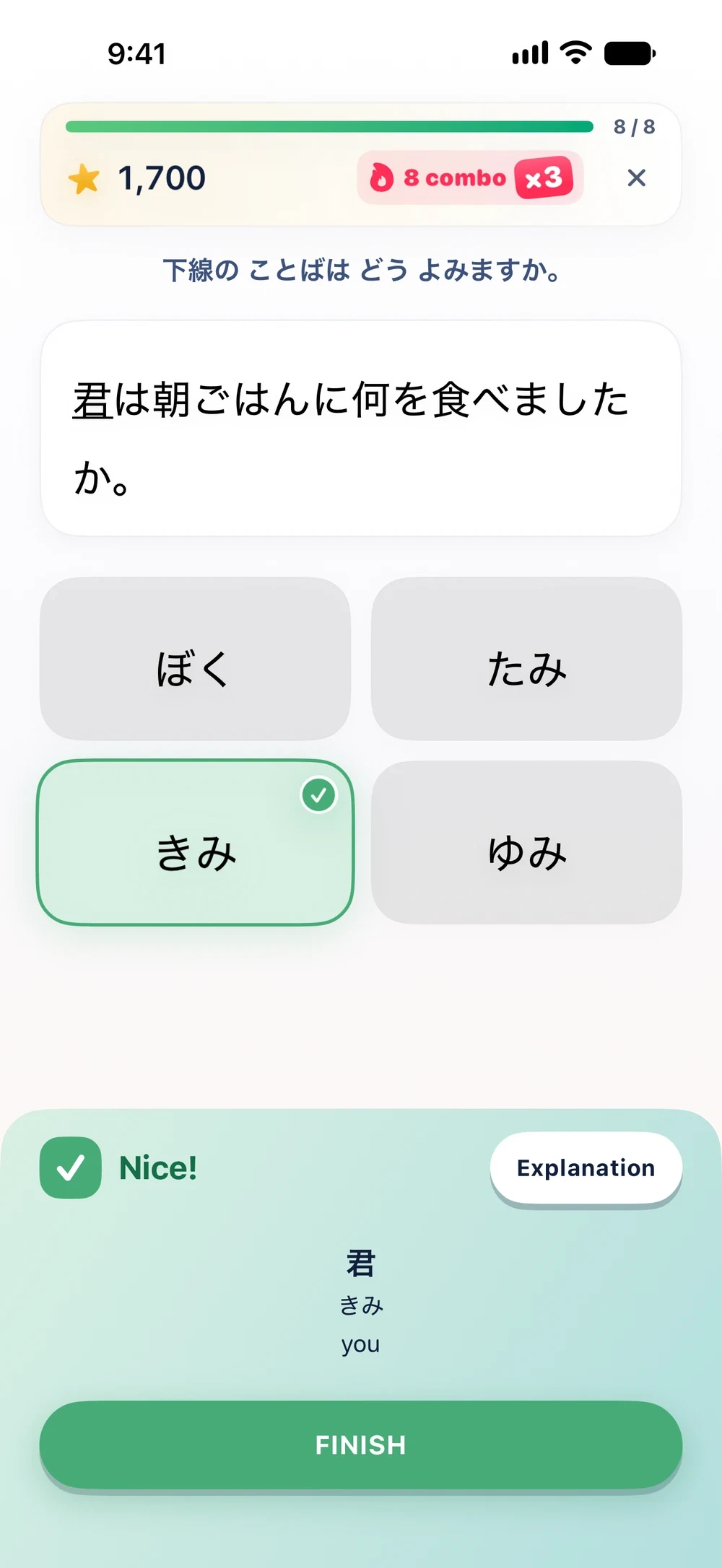
300+ N1 vocabulary, kanji and grammar questions, with the same scores and combos.
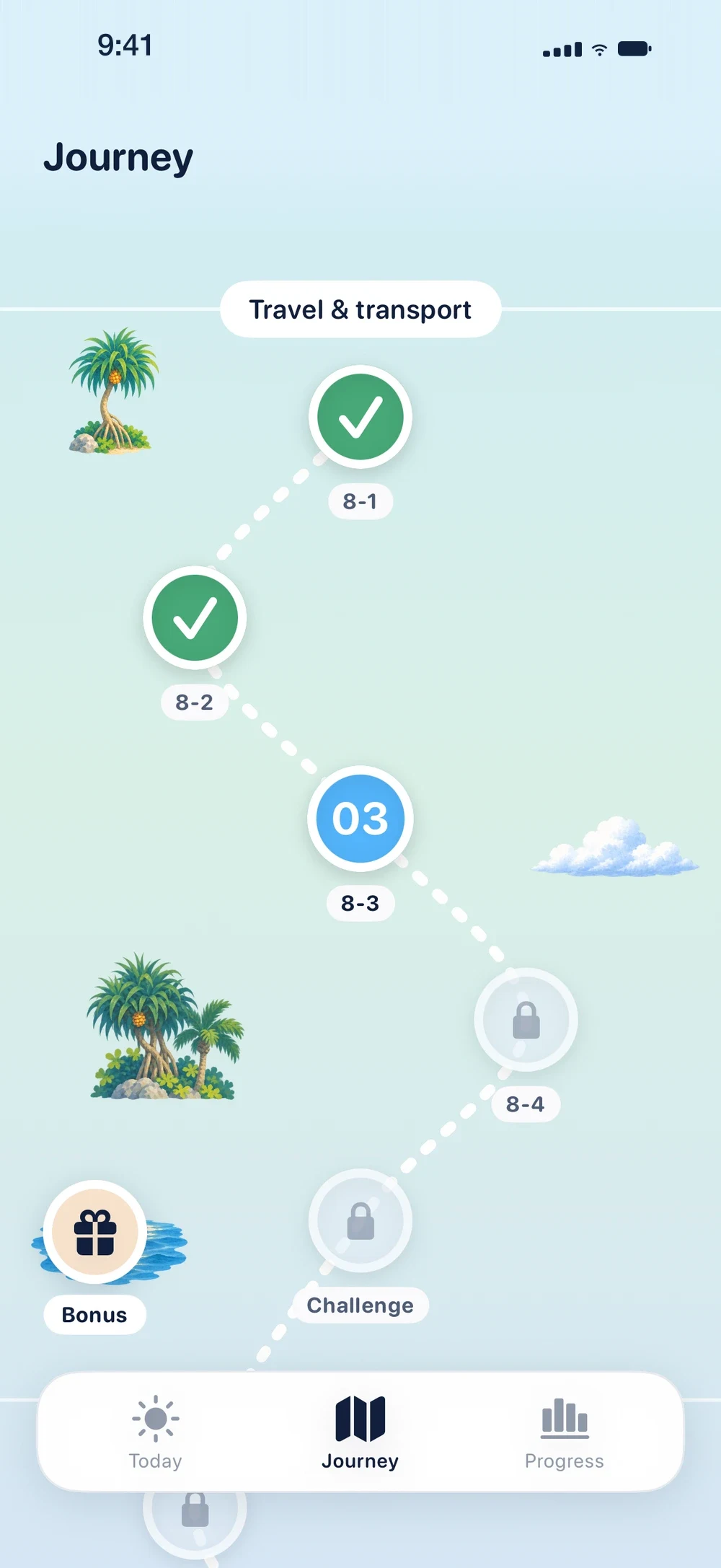
Learn in order, one topic at a time, instead of a random mix.
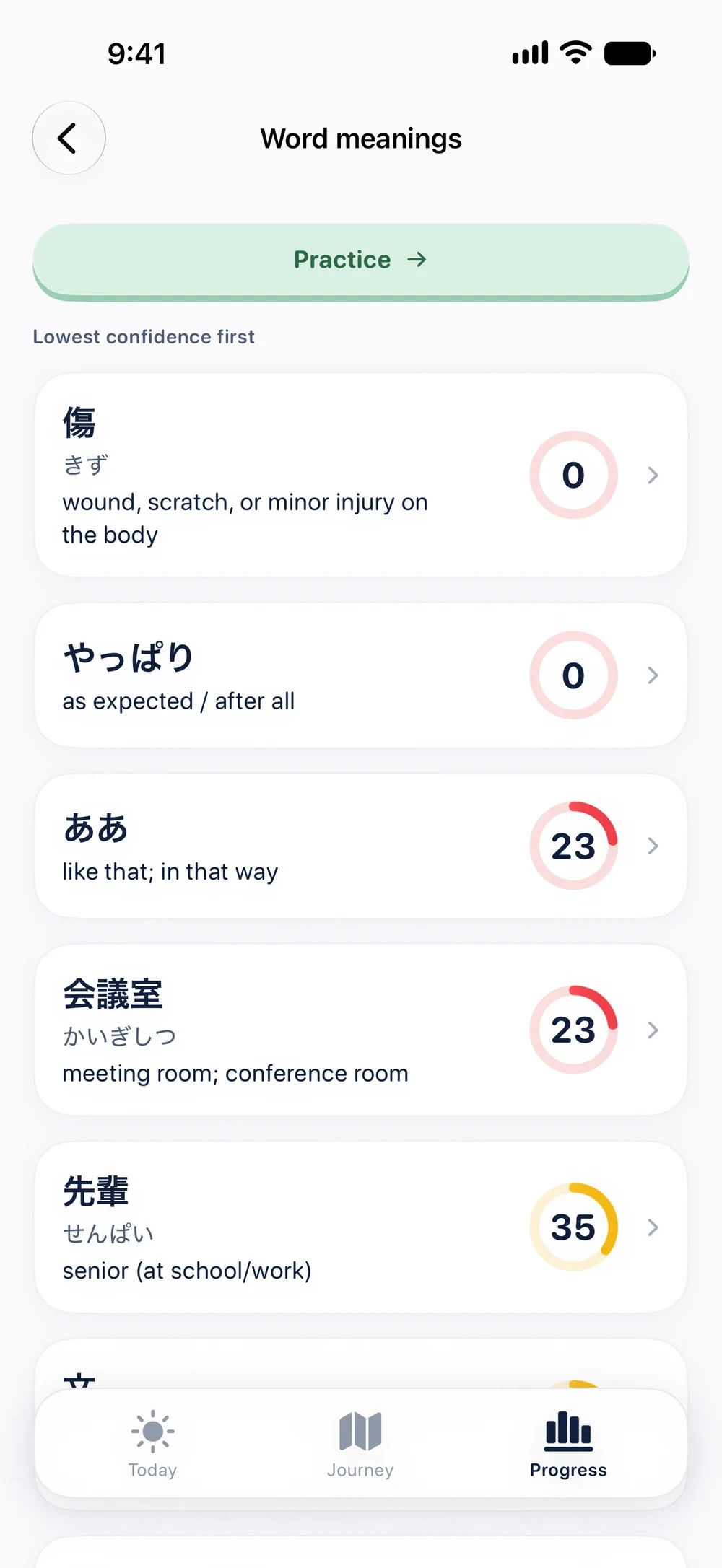
Find out which skills need work, and go back to what you missed.
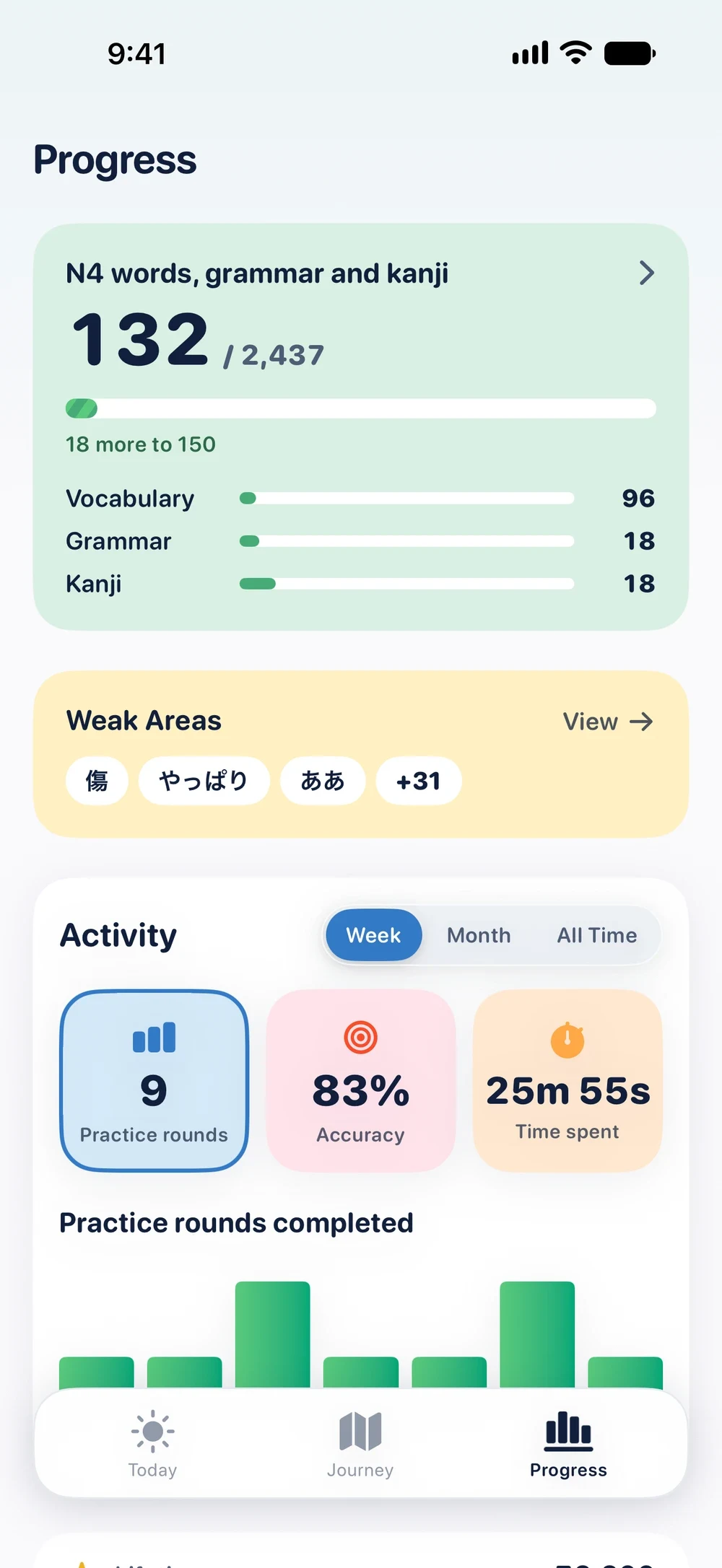
Your sessions, accuracy and study time, saved in one place.
More free N1 practice: printable PDF with answers · study plan calculator
Each round picks 10 of 60 free vocabulary, kanji and grammar questions at random. Read the explanation when you miss one, then play another round to beat your score. No account is needed.
Before checking the answer, state what the sentence is doing and why your choice expresses it. Recognizing a pattern is only the first step; the whole sentence must support the choice.
Use explanations to examine near misses, then look for the pattern in extended Japanese reading. Include listening and longer exam-format tasks in your weekly routine.
Use the free JLPT study-plan calculator to divide your available time between vocabulary, grammar, reading, and listening. These short sets are practice exercises, not a complete mock exam or a pass prediction.
For exam-format practice, consult the official JLPT practice workbooks. PocketMoji is an independent study app and is not affiliated with the JLPT organizers.